THE PAGES
Everything at once
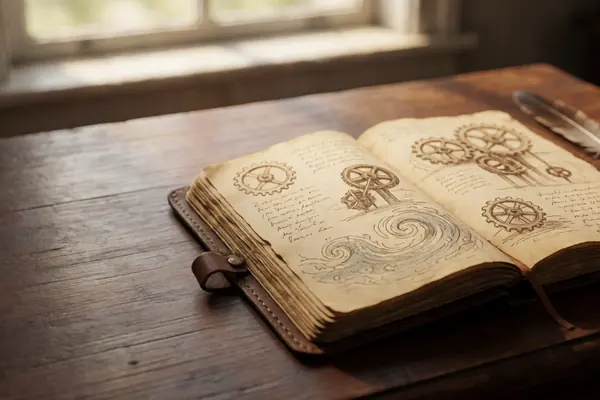
The V&A says no one used paper quite like Leonardo: a single sheet holds an unpredictable pattern of ideas and inventions, like a designer and a scientist at work.
Open a notebook doodledavinci
Start
ART HISTORY, FROM THE MUSEUMS
Leonardo drew to find out how things work.
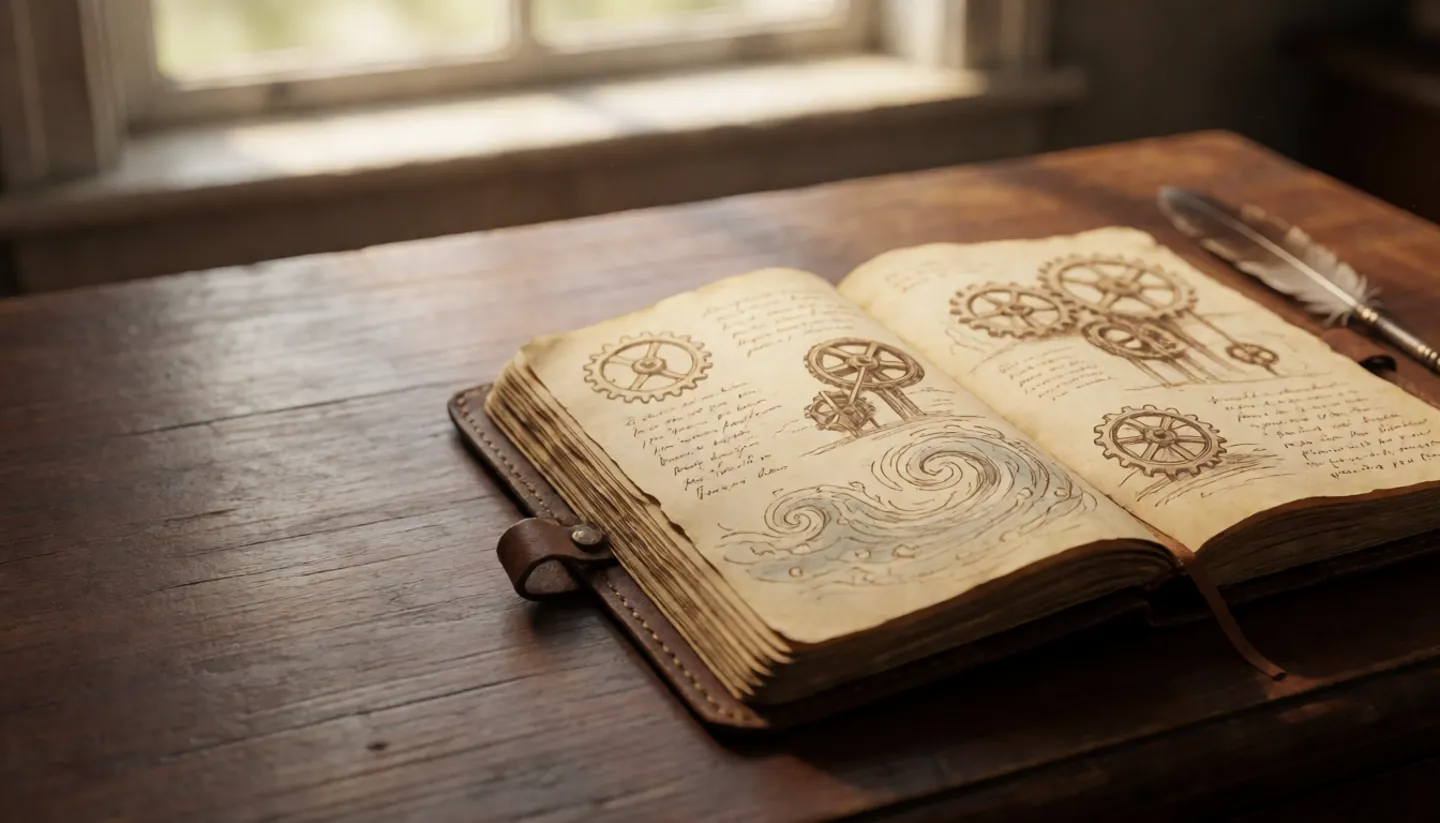
He left few finished paintings but a huge body of drawings and notes, written in mirror script from right to left. Museums that hold the notebooks describe a habit any sketcher will recognise: many ideas, side by side, on whatever paper was to hand.
≈ 2,500drawings left behind
Open a notebookKeep in mind
THE SHORT ANSWER
The Met calls drawing his tool for recording
his investigation of nature.
THE PAGES
The V&A says no one used paper quite like Leonardo: a single sheet holds an unpredictable pattern of ideas and inventions, like a designer and a scientist at work.
Open a notebookTHE WRITING
His notes are in mirror writing, read in reverse. The V&A says it may be because he was left-handed, and that the letters themselves are quite ordinary.
See the numbersTHE HABIT
The Met says he drew what he observed: anatomy, animals, plants, moving water and birds in flight, as well as the machines of his day.
Try the habitINSIDE THE V&A NOTEBOOKS
The V&A in London holds five of Leonardo's notebooks, bound into three volumes known as Codex Forster. Pick one to see what it contains. The bar shows where it falls between the earliest, about 1487, and the latest, 1505.
Descriptions from the Victoria and Albert Museum's articles on Leonardo da Vinci's notebooks. Art history only.
TWO NUMBERS WORTH KNOWING
One figure from the Met in New York,
one from the V&A in London.
≈ 2,500
Drawings Leonardo left
The Metropolitan Museum of Art says completed works by Leonardo are few, but he left a large body of drawings, almost 2,500, most still gathered into notebooks.
DRAWINGS · THE MET
5 in 3 volumes
Notebooks held in London's V&A
Five notebooks, bound into three small volumes called Codex Forster, have been in the V&A's collection since John Forster bequeathed them in 1876. They date from about 1487 to 1505.
NOTEBOOKS · V&A
The V&A thinks Leonardo probably worked on loose sheets bought from Milan's stationers, later folded into booklets and bound, possibly under the ownership of the sculptor Pompeo Leoni (1533–1608).
FOUR HABITS FROM THE NOTEBOOKS
These are not rules Leonardo wrote down; they are habits the museums describe in his pages. Each one works with a pencil and any paper.
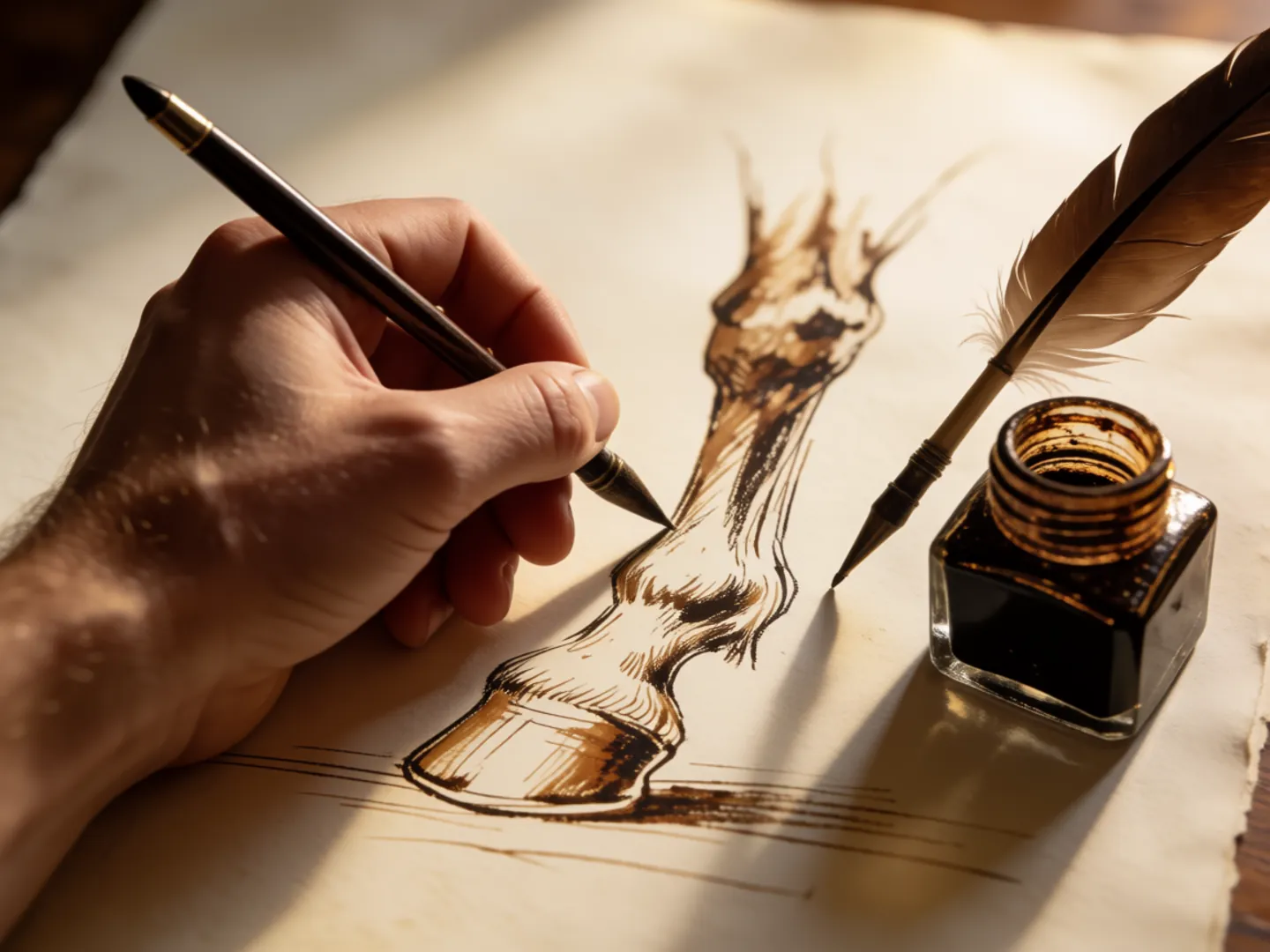
Step 1
The V&A says he probably carried loose sheets about with him to record what he noticed. A pocket sketchbook does the same job.
Step 2
His sheets mix machines, faces and diagrams. Do not save a fresh page for each idea; put them side by side and see what connects.
Step 3
The Met lists anatomy, animals, plants, water in motion and birds in flight. Pick one moving thing and sketch it several times.
Step 4
The National Gallery says he worked out a composition in a drawing before beginning a painting, as with the Burlington House Cartoon.
WHY MIRROR WRITING?
The V&A says the mirror writing has caused much speculation. Was he trying to make sure only he could read his notes, or did writing from right to left simply come easier because he was left-handed?
It adds that writing masters of the time demonstrated mirror writing, that his letter shapes were the ordinary script his father, a legal notary, would have used, and that the notes can be read once the eye gets used to the style. He also often started a notebook from what we would call the last page.
Questions
No one knows for certain. The V&A says one idea is secrecy and another is that, being left-handed, he found right-to-left writing easier. It notes writing masters of the time also demonstrated mirror writing.
The Metropolitan Museum of Art says he left a large body of drawings, almost 2,500, most still gathered into notebooks.
The V&A holds five notebooks bound into three volumes, the Codex Forster, in the National Art Library. It says one is on display in its Medieval and Renaissance galleries, and all three can be explored online.
The V&A notebooks cover water engineering, weights and balances, proportions, geometry, anatomy, costumes, locks and perpetual motion, which he studied and eventually rejected.
The Met and the National Gallery say he trained in Florence in the workshop of the sculptor and painter Andrea del Verrocchio.
Destination
Updated
ABOUT THIS NAME
doodledavinci.com is part of the DoodleSale portfolio. It isn't in an auction right now, but you can ask about leasing it.